“Small, vulnerable and wordless though the baby might be - it is at the same time power-packed with astonishing potential” - Desmond Morris.
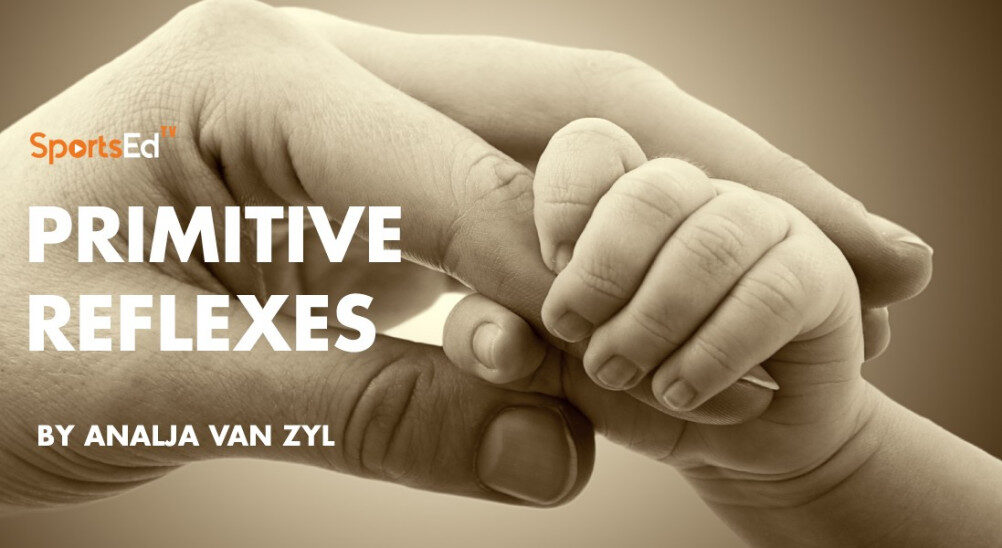
My first blog post served as an introduction to the development of gross motor skills. I will start to break the concept down through each of my following blog posts, starting with primitive reflexes. In short, primitive reflexes are reflexes that are exhibited by healthy infants in response to particular stimuli.
In the uterus a fetus already emerges with initial motor movements, but it is only once the baby is born that these motor movements form part of their survival complex. These motor movements emerge as early as directly after birth, and generally last for the first 9 months of the baby’s life. The primitive reflex-motor movements are vital for survival, and equally important as they set the standard for the gross and fine motors skills which will follow. It also forms part of the child’s developmental process.
Primitive reflexes originate from the oldest part of the baby’s brain. For example- palmar grasp is the strongest at 3 months. But as the ‘new brain’ begins to dominate the infant’s behavior, it will stimulate a reflex such as new grasping which is viable and controllable. We can generally see this around 6-9 months, when babies start to put everything in their mouths, which forms part of a sensory stimulation.
The following primitive reflexes are vital for further motor development: (Take note that there are a variety of other reflexes that is not mentioned).
|
Reflex |
Description “Small, vulnerable and wordless though the baby might be - it is at the same time power-packed with astonishing potential” - Desmond Morris. My first blog post served as an introduction to the development of gross motor skills. I will start to break the concept down through each of my following blog posts, starting with primitive reflexes. In short, primitive reflexes are reflexes that are exhibited by healthy infants in response to particular stimuli. In the uterus a fetus already emerges with initial motor movements, but it is only once the baby is born that these motor movements form part of their survival complex. These motor movements emerge as early as directly after birth, and generally last for the first 9 months of the baby’s life. The primitive reflex-motor movements are vital for survival, and equally important as they set the standard for the gross and fine motors skills which will follow. It also forms part of the child’s developmental process. Primitive reflexes originate from the oldest part of the baby’s brain. For example- palmar grasp is the strongest at 3 months. But as the ‘new brain’ begins to dominate the infant’s behavior, it will stimulate a reflex such as new grasping which is viable and controllable. We can generally see this around 6-9 months, when babies start to put everything in their mouths, which forms part of a sensory stimulation. The following primitive reflexes are vital for further motor development: (Take note that there are a variety of other reflexes that is not mentioned).
As it can be seen in the table above, there are no ‘set in stone’ timelines for when these reflexes should be integrated. I can however serve as a guideline. It is vital to note by 12 months of age most of these reflexes should be integrated for successful motor development.
Share this story:
|